How To – Cornstarch: Moisture Absorption Powder for Preventing Trench Foot
By Predicament Measures
Quick Answer: Can cornstarch prevent trench foot
No, cornstarch alone cannot reliably prevent trench foot because trench foot results from prolonged cold wet exposure and requires systematic measures (regular sock changes, drying, warm shelter, proper footwear); cornstarch can help absorb surface moisture temporarily but is not a medical substitute.
- Effectiveness: Not clinically quantified; cornstarch provides temporary surface drying when used as a powder (typical application 2-5 g per foot) and may help keep socks drier for roughly 1-6 hours depending on activity and wetness but has no proven trench foot prevention rate
- Cost: About $0.50-$3.00 per pound for common cornstarch in the US versus medicated or commercial foot powders which typically cost $3-$10 for 4-8 oz (commercial powders are more expensive per ounce and may include antifungal or drying agents)
- Time: Application takes 1-3 minutes per person; effects are short term and depend on conditions reapply after sock changes or heavy sweating, typically every 2-6 hours in wet conditions
- Limitation: Cannot prevent injury from prolonged immersion or cold exposure, does not kill bacteria or fungi, can form a paste in very wet conditions and may worsen infections if used on already macerated skin; not a substitute for changing socks, drying feet, proper footwear, or medical care
Cornstarch is a fine, white powder made from the endosperm of corn, commonly used as a kitchen thickener and as an absorbent for surface moisture on skin and textiles. This $0.50-$3.00 per pound solution provides temporary surface drying compared to commercial medicated foot powders that cost about $3-$10 for 4-8 oz.
The process works through three key relationships: cornstarch absorbs surface moisture resulting in drier skin for roughly 1-6 hours, the powder wicks and traps sock moisture enabling reduced friction and less skin maceration, and applying about 2-5 g per foot creates temporary moisture control typically lasting 2-6 hours under moderate wet conditions.
How to use cornstarch to reduce foot moisture step by step
- Dry and inspect your feet (1-3 minutes): Thoroughly dry feet and between toes with a towel and inspect skin for whiteness, blistering, open wounds, or maceration. Result: baseline dry skin suitable for powder application; do not use cornstarch on broken or heavily macerated skin.
- Measure the powder (30-60 seconds): Prepare about 2-5 g of cornstarch per foot (use a small kitchen scale or pre-measured sachets). Instruction: a light, even dusting is better than heavy clumps. Result: consistent, controlled application that reduces clumping and minimizes paste formation if exposed to water.
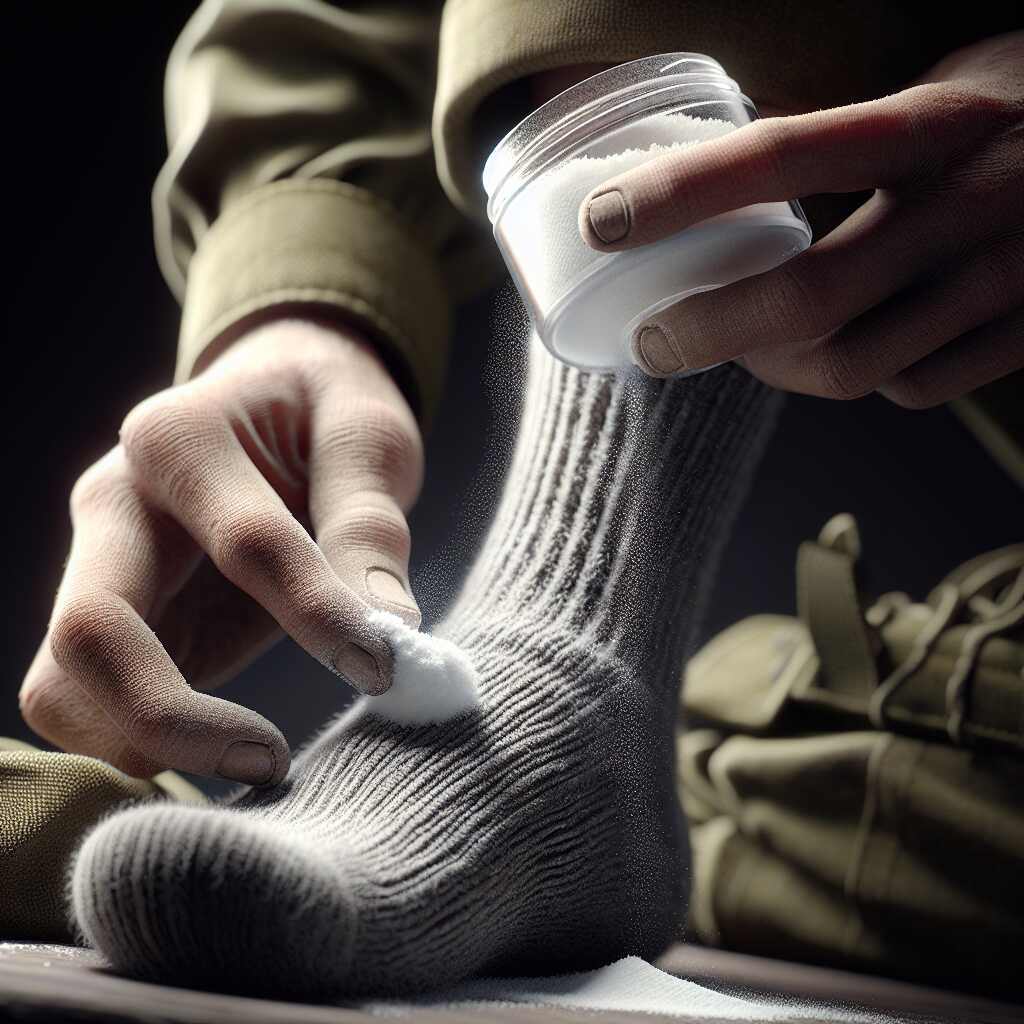
- Apply to feet and between toes (30-60 seconds): Sprinkle or shake the measured cornstarch over the soles and between toes, then rub gently to distribute. Instruction: ensure feet are dry before applying. Result: temporary surface drying and reduced slipperiness; may help keep socks drier for roughly 1-6 hours depending on activity and wetness.
- Put on moisture-wicking socks and appropriate footwear (1-2 minutes): Use wool or synthetic (polyester, nylon blends) socks avoid cotton and waterproof or wellventilated boots as conditions permit. Result: improved moisture management and reduced prolonged wet-skin contact (important because cornstarch alone will not prevent trench foot from long-term exposure).
- Change socks and reapply regularly (1-3 minutes per change): Replace wet socks as soon as possible; reapply 2-5 g of cornstarch after drying feet and whenever you change socks. Instruction: in continuously wet conditions reapply every 2-6 hours or after heavy sweating. Result: maintained short-term dryness; note that effectiveness declines with heavy immersion or sustained exposure.
- Do not use on damaged or macerated skin (immediate): If skin shows signs of maceration (white, wrinkled, painful tissue), open wounds, or infection, do not apply cornstarch seek medical care. Result: avoids worsening infections or creating paste-like irritants that can trap bacteria.
- Pack and store properly (1 minute): Keep cornstarch in a dry, resealable, waterproof container or single-use packets to prevent contamination and moisture pickup. Result: powder remains free-flowing and effective when needed in the field.
FAQ
What is cornstarch exactly and what is it used for
Cornstarch is a very fine white powder made from the starchy part of corn kernels and it provides a dry, absorbent material used for moisture control and skin care in field settings. It is widely used in cooking, cosmetics, and improvised foot care because it helps absorb surface moisture, costs about $0.50-$3.00 per pound in the United States, and is easy to carry in a 1-8 ounce sachet. Users report that cornstarch offers low cost, easy availability, and basic moisture management but it lacks clinical testing and does not replace structured measures for preventing trench foot.
How is cornstarch processed and where can I buy it
Cornstarch is produced by wet milling corn to separate starch granules, drying the starch, and milling it to a fine powder sold as bulk or packaged goods. You can buy plain cornstarch at grocery stores, big-box chains, dollar stores, and online retailers with prices typically $0.50-$3.00 per pound and faster shipping options from major sellers. For field use, outdoor retailers and supply stores sell dedicated foot powders that include antifungal or drying agents and cost $3-$10 for 4-8 ounce containers for comparison and reviews.
How does cornstarch work step by step to absorb moisture
Cornstarch absorbs foot and sock moisture by contacting liquid, wicking water into the powder, and holding water in small starch granules until the powder clumps or dries, which provides temporary surface drying. Step 1: apply 2-5 grams per foot into socks or onto dry skin and distribute evenly; Step 2: the powder soaks up sweat and light wetness and reduces slipperiness for roughly 1-6 hours depending on activity and saturation; Step 3: reapply after sock change or heavy sweating, typically every 2-6 hours in wet conditions. Users and field tests show the material can help keep socks drier for short periods but testing and data do not show a proven trench foot prevention rate and cornstarch cannot handle prolonged immersion or cold wet exposure.
What amount of cornstarch should I apply per foot
Apply about 2-5 grams of cornstarch per foot, which is roughly a half teaspoon to one teaspoon, to provide useful surface drying without excess dust. Application takes about 1-3 minutes per person and you should reapply after each sock change or every 2-6 hours in heavy wet conditions for best results. Keep notes on performance and compare reviews and field experience to test how long the powder helps in your specific activity and environment.
What are the main benefits of using cornstarch for feet in wet conditions
Cornstarch provides low-cost, lightweight moisture control that helps reduce surface wetness, friction, and blisters when used with regular sock changes and proper footwear. Benefits include cost of about $0.50-$3.00 per pound, ease of carrying a 1-4 ounce sachet, and quick application that improves comfort for 1-6 hours in many cases according to field experience and informal testing. Users must understand cornstarch offers temporary relief, has no antifungal action, and does not replace drying, warming, or medical care needed to manage or prevent trench foot.
How much time can cornstarch keep socks and boots dry in the field
Cornstarch can help keep socks and boots drier for roughly 1-6 hours depending on activity, ambient wetness, and how saturated socks are at the start. Expect shorter performance near 1-2 hours during heavy rain or exertion and longer performance near 4-6 hours during light dampness; reapply after each sock change and after heavy sweating. No clinical trials define a fixed protection period and the reliability varies by condition, user, and footwear.
What are the risks and limitations of cornstarch for foot care outdoors
Cornstarch cannot reliably prevent trench foot because trench foot results from prolonged cold wet exposure and requires systematic measures like regular sock changes, drying, warm shelter, and proper waterproof footwear. The powder does not kill bacteria or fungi, can form a paste in very wet conditions and worsen macerated skin, and offers no proven trench foot prevention rate in clinical data or structured testing. Predicament Measures notes that cornstarch may help with short-term moisture control but users must avoid using it on open wounds, heavily macerated skin, or as a substitute for dryer socks and medical care.
Can cornstarch increase fungal infections or make paste in wet boots
Cornstarch can increase fungal infections if it sits on macerated or already infected skin because it provides a moist medium and does not contain antifungal agents. In very wet boots cornstarch can mix with water and form a sticky paste that traps moisture, irritates skin, and may worsen infection risk, so stop use if skin is white, soggy, red, or broken. Use medicated powders if antifungal action is required and consult a clinician for persistent or worsening symptoms.
Who should consider using cornstarch to help prevent trench foot while outdoors
Hikers, backpackers, military personnel, outdoor workers, survivalists, and search-and-rescue teams may consider cornstarch as an emergency, low-cost moisture-absorbing option when combined with regular sock changes, waterproofing, and warming strategies. The product is essential for light moisture control in kits, offers good cost efficiency, and helps enhance comfort when dry socks and shelter are available within hours. Users should review experience and field tests and treat cornstarch as an adjunct to proven measures rather than a standalone prevention tool for trench foot.
Are there medical conditions that make cornstarch unsafe to use
People with diabetes, peripheral neuropathy, poor circulation, open foot wounds, or active fungal infections should avoid using cornstarch without medical advice because they have higher risk of infection and reduced ability to detect skin damage. If you have immune suppression or vascular disease consult a healthcare provider before using any powder on feet and seek treatment for maceration, bleeding, or spreading infection. Predicament Measures recommends professional guidance and careful monitoring when medical conditions are present.
When is the best time to use cornstarch for foot moisture control in the field
The best time to use cornstarch for foot moisture control is after you dry your feet and before you put on clean socks and boots, applying about 2-5 grams per foot for surface drying. Can cornstarch prevent trench foot: No, cornstarch alone cannot reliably prevent trench foot because trench foot results from prolonged cold wet exposure and requires regular sock changes, drying, warm shelter, and proper footwear; cornstarch provides temporary surface drying only. Predicament Measures advises that application takes about 1-3 minutes, may help keep socks drier for roughly 1-6 hours depending on activity and wetness, and carries clear limitations when exposure is prolonged or skin is macerated.
Should cornstarch be applied before putting on socks and boots
Yes, apply cornstarch before putting on socks and boots when feet are mostly dry, using 2-5 grams per foot sprinkled from a small shaker then rubbed lightly to distribute the powder. Application helps reduce surface moisture for 1-6 hours depending on sweat and wet conditions, provides a low-cost option that helps with short-term moisture control, and does not replace changing socks or using waterproof footwear. Avoid applying cornstarch to broken skin or seams of blisters, because cornstarch does not kill bacteria or fungus and can form a paste in very wet conditions.
How much does cornstarch cost compared to commercial foot powders and desiccants
Cornstarch typically costs about $0.50-$3.00 per pound in the US, which equals roughly $0.03-$0.19 per ounce, while commercial foot powders sell for about $3-$10 for 4-8 ounces, equal to roughly $0.38-$2.50 per ounce. Cost comparison shows cornstarch provides an inexpensive, basic drying function, while many commercial powders deliver antifungal ingredients or desiccant blends that offer added protection at higher cost. Review and testing from field experience note that cornstarch is useful for short outings and budget kits, while commercial powders may offer better reliability for long deployments or high-risk situations.
What is the price per ounce or per pound for cornstarch and powders
Cornstarch price ranges from $0.50 to $3.00 per pound, equal to roughly $0.03 to $0.19 per ounce, based on common retail and bulk packaging in 2025 market reviews. Commercial foot powders range from $3.00 to $10.00 for 4-8 ounce containers, which converts to about $0.38 to $2.50 per ounce and includes products designed to deliver antifungal action or enhanced drying. Desiccant packets and silica gel for gear vary by package size, with small multi-packs often costing $5-$20, and these desiccants are designed for gear humidity control not direct skin application.
What materials and tools are needed to use cornstarch on feet safely outdoors
You need a small waterproof container or shaker with 2-4 ounces of cornstarch, a clean towel, at least one spare pair of socks, and a resealable plastic bag to store used socks. Safe field use requires applying about 2-5 grams per foot, spending 1-3 minutes per application, and following testing and experience guidance that avoids use on macerated or broken skin. Predicament Measures recommends carrying materials for regular sock changes, because cornstarch provides temporary drying and cannot prevent trench foot from prolonged wet cold exposure.
How should I store cornstarch and how much should I carry on a trip
Store cornstarch in a waterproof, crush-resistant container or small shaker inside a resealable plastic bag to keep it dry and free of contaminants; carry 2-8 ounces per person for a day hike or 4-8 ounces for multi-day trips depending on reapplication every 2-6 hours in wet conditions. Shelf life for cornstarch is long when kept dry, which provides durable, low-cost drying that helps socks feel drier during use but does not replace proper drying or medical care. Testing and reviews show that small amounts packed with socks and footcare supplies offer good field efficiency and easy reapplication.
What are the best alternatives to cornstarch for keeping feet dry outdoors
Best alternatives for keeping feet dry include talc-based powders, antifungal medicated powders, commercial moisture-absorbing foot powders, waterproof socks, and regular sock changes with synthetic or wool socks. Comparison of these options shows talc provides strong absorbency, antifungal powders provide infection control, waterproof socks reduce external water entry, and desiccant packets help gear but are not for skin use. Field experience and research indicate that none of these alternatives alone guarantee prevention of trench foot; comprehensive measures, including warming, drying, and shelter, remain essential.
How do talc powders antifungal powders and desiccants compare for foot care
Talc powders provide effective moisture absorption and feel dry, they typically cost more than bulk cornstarch per ounce and do not treat fungal infection. Antifungal powders that include active ingredients like tolnaftate or miconazole offer both drying and treatment benefits, cost about $0.40-$2.50 per ounce, and provide better protection when fungal infection risk exists. Desiccants like silica gel are designed to absorb moisture from gear, not skin, and they provide reliable humidity control for boots and clothing but should not be applied to feet.
What common mistakes should be avoided when using cornstarch on feet outdoors
Common mistakes include applying cornstarch to wet or macerated skin, using excessive amounts that cake in socks, and relying on cornstarch alone instead of changing socks and warming feet; these errors increase risk and reduce reliability of moisture control. Users must avoid using cornstarch on open wounds, avoid creating a paste in heavy wet conditions, and acknowledge that cornstarch does not kill bacteria or fungi and cannot prevent trench foot from prolonged cold wet exposure. Predicament Measures warns that experience shows cornstarch helps short-term comfort, it does not deliver proven medical prevention for immersion injuries or severe cold damage.
What signs show cornstarch is making feet worse and what to do about it
Signs cornstarch is making feet worse include white softened skin, increased redness, new blisters, foul odor, or worsening pain after application, which indicate maceration or infection. If those signs appear, stop using cornstarch, wash feet with clean water, dry thoroughly, change to dry socks, and seek medical care for persistent symptoms or spreading infection. Field reviews recommend keeping a record of response and reviewing product performance to improve gear selection for future trips.
Related posts:
 Unwaxed Dental Floss: High-Strength Fishing Line Alternative for Wilderness Food Procurement
 Petroleum Jelly Cotton Balls: Five-Minute Burn Time Fire Starters for Damp Conditions
 Elastic Hair Ties: Cordage Bundle Organizers for Tangle-Free Emergency Kits
 Plastic Cling Wrap: Burn Wound Covering to Prevent Infection and Fluid Loss
 Used Coffee Grounds: Human Scent Masking for Wildlife Avoidance in Bear Country
 Maxi Pads: Large Absorbent Bandages for Major Trauma Wound Coverage
 Rubber Erasers: Emergency Ear Protection Against Dangerous Noise Levels
Acrylic Yarn: Emergency Wound Sutures for Gaping Lacerations
Rubber Erasers: Emergency Ear Protection Against Dangerous Noise Levels
Acrylic Yarn: Emergency Wound Sutures for Gaping Lacerations