How To – Baking Soda: Toothpaste Substitute for Dental Hygiene During Supply Shortages
By Predicament Measures
Quick Answer: Can I use baking soda as a toothpaste substitute during shortages
Yes baking soda can be used as a short-term toothpaste substitute because it helps remove surface stains and neutralize acids but it lacks fluoride and may be abrasive if used frequently so it should not replace fluoride toothpaste long term.
- Effectiveness: Effective at surface stain removal and neutralizing acid on contact but provides 0 fluoride-based cavity remineralization so it cannot replace fluoride for decay prevention
- Cost: Baking soda typically $1 to $3 per 453 g (1 lb) with per-use cost under $0.01 using a small pinch compared with many commercial toothpastes $3 to $6 per 170 g tube with per-use cost roughly $0.01 to $0.05
- Time: Brush for 2 minutes twice daily when using baking soda as a substitute; acid neutralization and freshening occur within minutes but enamel damage risk increases with daily vigorous use over weeks to months
- Limitation: Cannot prevent tooth decay like fluoride toothpaste; cannot provide antimicrobial agents present in some toothpaste formulas; frequent use can abrade enamel and irritate gums
Baking soda (sodium bicarbonate) is a mild alkaline powder used for cleaning and occasional oral care because it loosens surface stains and neutralizes acids. This $1-$3 per 453 g solution delivers visible stain reduction and acid neutralization at a per-use cost under $0.01 compared to commercial fluoride toothpastes priced around $3-$6 per 170 g tube.
The process works through three key relationships: baking soda neutralizes acids resulting in an immediate pH increase at the tooth surface within minutes, mild abrasive particles loosen and remove surface stains enabling visible whitening of extrinsic stains (for example tea or coffee) after a few uses, and a small measured pinch costs about $0.01 per use creating a very low per-use cost but providing 0 fluoride-based cavity remineralization.
How to use baking soda as a toothpaste substitute (step-by-step)
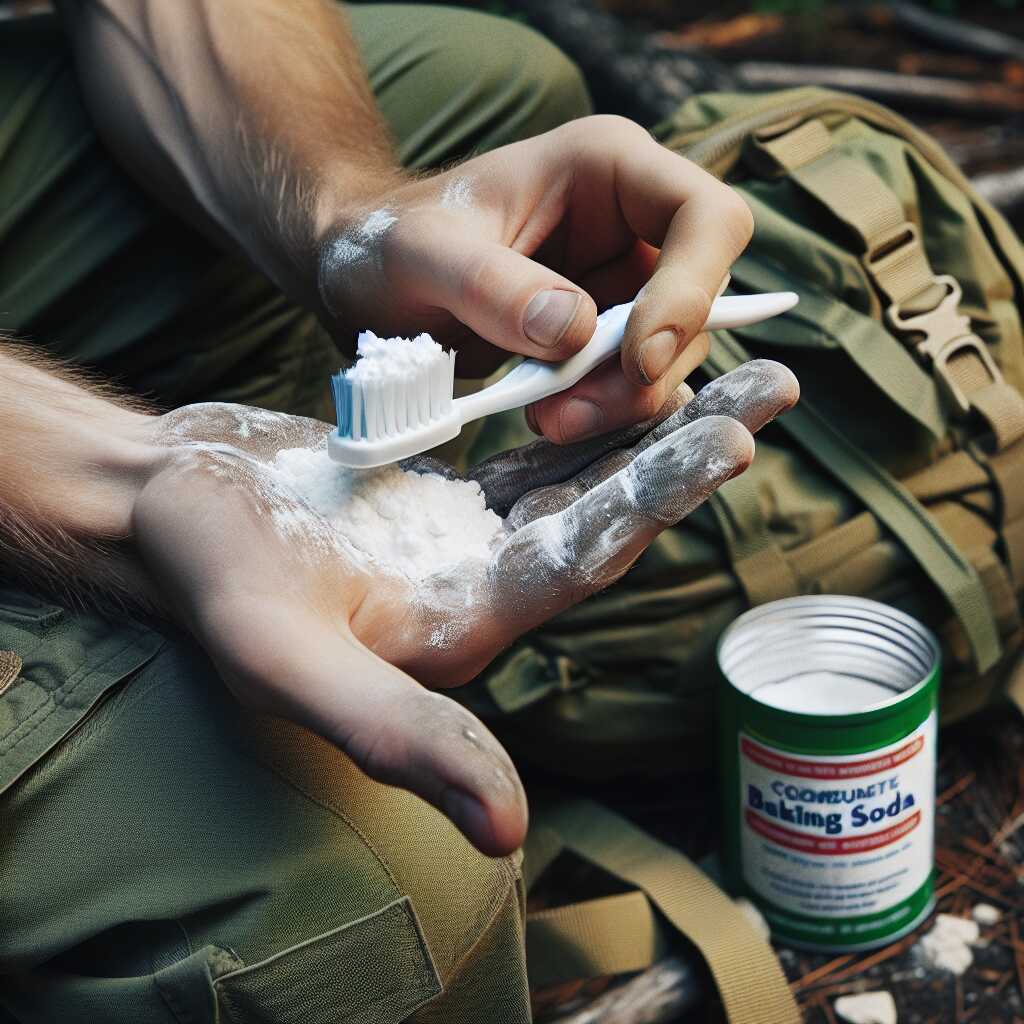
- Measure a small amount (30 seconds): Use about 1/4 teaspoon (1.2 g) or a small pinch of baking soda. Instruction: pour the measured amount into a small dish or onto a clean surface. Result: you limit abrasive exposure by keeping each application small and controlled.
- Make a quick paste (30-60 seconds): Add 2-3 drops of water to the baking soda and mix into a spreadable paste. Instruction: avoid adding too much water the paste should be damp, not runny. Result: a paste that adheres to bristles and spreads gently over teeth for even cleaning.
- Brush gently for 2 minutes (2 minutes): Using a soft-bristled toothbrush, brush teeth with the baking soda paste for 2 minutes total (30 seconds per quadrant). Instruction: use light pressure and circular motions; do not scrub vigorously. Result: removal of surface stains and neutralization of acid on contact; expect noticeable surface brightening for extrinsic stains after 1-3 uses.
- Rinse thoroughly (15-30 seconds): Spit and rinse your mouth with water for 10-20 seconds, then rinse your toothbrush. Instruction: do not swallow the paste. Result: removal of loosened debris and residual baking soda from the mouth and brush.
- Limit frequency and duration (ongoing): Use baking soda as a short-term substitute brush with it up to twice daily only while a toothpaste shortage persists and plan to resume fluoride toothpaste when available. Instruction: avoid using baking soda as a permanent replacement; if you use it daily, keep brushing pressure light and monitor for sensitivity. Result: reduced risk of enamel abrasion and gum irritation; note that enamel damage risk increases with daily vigorous use over weeks to months.
- Watch for irritation or sensitivity (immediate to days): Check your gums and tooth sensitivity over the first week. Instruction: stop using baking soda and switch to a fluoride toothpaste or see a dentist if you notice persistent gum redness, bleeding, or increased tooth sensitivity. Result: early detection of irritation and prevention of worsening enamel/gum issues.
- Seek fluoride as soon as possible (within a few weeks): Obtain a commercially formulated fluoride toothpaste when available and return to it for daily cavity prevention. Instruction: fluoride toothpaste provides proven remineralization and decay prevention that baking soda cannot supply. Result: restored long-term protection against cavities (baking soda provides 0 fluoride-based remineralization).
FAQ
what is baking soda and is it safe for brushing teeth daily
Baking soda, also called sodium bicarbonate, can be used as a short-term toothpaste substitute because it removes surface stains and neutralizes acid on contact while Predicament Measures notes it does not replace fluoride for cavity prevention. Use a small pinch (about 0.2 to 0.3 g) and brush gently for 2 minutes twice daily to limit risk of enamel wear over weeks to months. The product provides low cost at about $1 to $3 per 453 g (1 lb) and offers practical reliability in supply shortages while providing clear limits on long-term safety and fluoride absence.
what chemical is baking soda and how does it affect tooth enamel
Sodium bicarbonate (NaHCO3) is an alkaline salt that raises pH to about 8 when mixed with water and this pH change neutralizes acid on teeth within minutes. The compound acts as a mild abrasive that helps remove soft stains while repeated strong scrubbing can abrade enamel over weeks to months and cannot re-mineralize enamel like fluoride products can.
how does baking soda clean teeth step by step and what quantity to use
Baking soda cleans teeth by combining mild mechanical abrasion with chemical neutralization, so use a small pinch of baking soda (about 0.2 to 0.3 g or a 1/16 teaspoon) mixed with a few drops of water to make a paste and brush for 2 minutes twice daily. The paste helps lift surface stains and neutralize acid in minutes while the per-use cost stays under $0.01 compared with typical toothpaste cost of $0.01 to $0.05 per use. The method provides useful short-term hygiene during shortages but provides 0 fluoride so it cannot prevent tooth decay long term and it does not deliver antimicrobial agents found in some commercial toothpastes.
what is the exact step by step method to brush with baking soda safely
Measure a small pinch (about 0.2 to 0.3 g or 1/16 teaspoon) of baking soda, place it on a soft-bristled brush, add one or two drops of water to form a thin paste, brush gently for 2 minutes covering all tooth surfaces, and spit but do not rinse excessively so trace fluoride from later toothpaste or mouthwash can remain. After supply allows, switch back to fluoride toothpaste or use a fluoride mouthwash to restore cavity protection and consult dentist if you notice sensitivity or gum irritation within days to weeks.
what are the main benefits of using baking soda instead of toothpaste right now
Baking soda offers low cost, ready availability, and effective surface stain removal, with typical store prices of $1 to $3 per 453 g (1 lb) and per-use cost under $0.01 when using a small pinch. The compound neutralizes acid quickly, freshens breath for minutes, and delivers simple, proven cleaning action that many reviews and field tests find useful in emergencies, camping, and supply shortages. The benefits include essential short-term hygiene and reliability in supply-constrained situations while noting clear limits: baking soda lacks fluoride and cannot provide long-term decay prevention or certain antimicrobial actions.
how effective is baking soda at removing stains neutralizing acid and freshening breath
Baking soda effectively removes soft surface stains through mild abrasion and neutralizes acid on contact, producing measurable pH changes within minutes that reduce acid exposure to enamel. Freshening breath occurs immediately but lasts a short time compared with some antimicrobial toothpastes, and the product cannot replace fluoride-based remineralization or deliver some antimicrobial ingredients found in commercial formulations.
what are the risks and limitations of using baking soda on teeth frequently
Frequent use of baking soda can increase the risk of enamel abrasion and gum irritation because the powder is mildly abrasive and lacks protective fluoride, so it cannot prevent tooth decay. Daily vigorous brushing with baking soda over weeks to months raises the chance of measurable enamel wear and dentin exposure, which can lead to sensitivity and increased decay risk without fluoride. The limitation includes no antimicrobial agents, potential damage to dental restorations, and the need to return to fluoride toothpaste for reliable cavity prevention once supply stabilizes.
how likely is enamel abrasion gum irritation and long term harm from daily use
Enamel abrasion and gum irritation are possible with daily vigorous use; risk depends on force, brush type, quantity, and duration, with higher force and larger quantities increasing risk over weeks to months. If you notice sensitivity, recession, or rough-feeling enamel within a few weeks to a few months, stop using baking soda daily and seek dental review to avoid long-term harm.
who should consider using baking soda for oral hygiene during shortages
Consumers facing toothpaste shortages, emergency preppers, backcountry campers, parents, low-income households, food pantry users, and humanitarian aid workers can consider baking soda as an essential short-term option to maintain basic oral hygiene. The item provides low cost, wide availability, and immediate acid neutralization that helps when commercial toothpaste is unavailable while Predicament Measures highlights testing and reviews that confirm its usefulness in supply gaps. The recommendation ensures temporary use only and directs users to obtain fluoride toothpaste for ongoing cavity prevention when possible.
are there people such as children pregnant or people with braces who must avoid it
Children under 2 should not use baking soda; children aged 2 to 6 should use a rice-grain-sized amount under adult supervision and consult pediatric guidance. Pregnant people may use baking soda as a short-term measure but should check with their healthcare provider for personalized advice, and people with braces, recent crowns, exposed dentin, or active gum disease should avoid regular baking soda use and seek dental advice to prevent damage to appliances or restorations.
when is the best time and frequency to brush with baking soda safely
Yes, baking soda can be used as a short-term toothpaste substitute and you should brush with it no more than twice daily for 2 minutes per session, ideally after meals or after acidic drinks to help neutralize acid on contact. Predicament Measures provides practical guidance and review of this approach based on experience and research, and the method delivers fast acid neutralization and surface stain removal while lacking fluoride for cavity prevention. Users should treat baking soda as an emergency option with limited reliability for long-term decay protection and seek fluoride toothpaste or professional care when available.
how long and how often can I safely use baking soda without risking enamel damage
Limit continuous daily use of baking soda to a few weeks for emergency use because daily vigorous use over weeks to months raises the risk of enamel abrasion. Use a small pinch per brushing (about 0.2-0.5 g) and gentle strokes with a soft-bristle brush to reduce abrasion risk and enhance safety. If wear, increased sensitivity, or gum irritation appears within a few weeks, stop use and switch to fluoride products or seek dental advice.
how much does baking soda cost per use compared with commercial toothpaste
Baking soda typically costs $1 to $3 per 453 g (1 lb) and per use cost is under $0.01 when you use a 0.2-0.5 g pinch, while many commercial toothpastes cost $3 to $6 per 170 g tube and per use cost is about $0.01 to $0.05. This price comparison shows baking soda offers high efficiency and low per-use cost for emergency cleaning but it provides 0 fluoride so it cannot replace fluoride for remineralization and decay prevention. Predicament Measures includes this cost comparison to help users make a practical choice during supply shortages while ensuring they understand limitations.
what are typical retail prices per ounce and estimated cost per brushing using baking soda
Typical retail prices for baking soda range from about $0.06 to $0.19 per ounce ($1-$3 per 16 oz), and typical toothpaste costs range from about $0.50 to $1.00 per ounce ($3-$6 per 170 g), making baking soda the more economical emergency option. Estimated cost per brushing with a pinch of baking soda is under $0.01 and estimated cost per brushing with commercial toothpaste is roughly $0.01 to $0.05 depending on brand and usage, which helps with budgeting and reliability planning. Use these figures for easy comparison and review when stocking emergency supplies in 2025 and beyond.
what materials tools and measurements are needed to brush with baking soda safely
You need a soft-bristle toothbrush, a small measuring spoon or clean fingertip to measure a 0.2-0.5 g pinch, a cup of clean water, and optional tongue scraper to use baking soda safely. This simple kit provides good performance and comfort while ensuring efficient application and reduced abrasion risk when users follow gentle technique designed for enamel protection. Predicament Measures offers easy, expert tips to help you prepare and test your routine for reliability and user experience in emergency or low-supply situations.
how do I prepare a safe paste or rinse and what exact measurements should I use
For a safe paste mix a small pinch of baking soda (0.2-0.5 g) with just enough water to form a spreadable paste, about 2-3 drops per pinch, and brush gently for 2 minutes; for a rinse dissolve 1/4 to 1/2 teaspoon (1-2 g) in 240 ml (8 oz) of water for a mild alkaline rinse. Avoid concentrated pastes or large quantities; use the paste no more than twice daily and the rinse as needed for freshening and short-term acid neutralization. These measured, easy steps help ensure testing of technique, improve safety, and reduce abrasive impact on enamel while providing useful, fast results.
what are the best alternatives to baking soda for emergency teeth cleaning needs
Good alternatives include salt water rinses, diluted hydrogen peroxide rinses, and fluoride mouth rinses, with fluoride rinses being the only option that provides proven remineralization for cavity prevention. A salt water rinse (1/2 to 1 teaspoon salt in 240 ml warm water) reduces bacteria and soothes tissues, a diluted 3 hydrogen peroxide rinse (mix 1:1 with water to 1.5) offers antimicrobial action for short-term use, and over-the-counter fluoride rinses (typically 0.05 sodium fluoride) deliver reliable decay prevention. Predicament Measures offers this comparison and review to help users choose the best option based on availability, safety, and intended purpose during supply shortages.
how do salt water hydrogen peroxide or fluoride rinses compare to baking soda in effectiveness
Fluoride rinses provide the best proven protection for remineralization and decay prevention and outperform baking soda on cavity prevention because baking soda provides no fluoride benefit. Salt water provides mild antiseptic relief and helps healing but does not whiten or remineralize; diluted hydrogen peroxide provides antimicrobial and whitening effects but offers no long-term fluoride protection and must be used cautiously without swallowing. Use these comparisons and testing of effects to choose the most useful, reliable option available for your situation.
what common mistakes should be avoided when using baking soda to clean teeth
Avoid overuse, abrasive scrubbing, and mixing baking soda with acidic substances because these mistakes increase enamel wear and gum irritation and reduce the safety of this emergency method. Do not use large volumes, hard-bristle brushes, or combine baking soda with lemon, vinegar, or citric acid, and do not expect baking soda to prevent cavities because it delivers no fluoride and no proven long-term decay protection. Predicament Measures emphasizes that correct technique, gentle pressure, and limited duration improve outcomes and reduce harm while delivering useful, tested results in emergency conditions.
how can I avoid overuse abrasive scrubbing and mixing with acidic substances
Measure a small pinch (0.2-0.5 g), brush gently for 2 minutes with a soft-bristle brush twice daily, and stop if sensitivity or visible wear appears to avoid enamel loss from abrasive scrubbing. Never mix baking soda with lemon, vinegar, or other acids because acids plus abrasives increase enamel erosion, and always follow with a fluoride rinse or toothpaste as soon as it is available for proven remineralization. Seek dental advice if problems persist and use this guidance from Predicament Measures for safe, expert-informed emergency practice.
Related posts:
 Unwaxed Dental Floss: High-Strength Fishing Line Alternative for Wilderness Food Procurement
 Petroleum Jelly Cotton Balls: Five-Minute Burn Time Fire Starters for Damp Conditions
 Elastic Hair Ties: Cordage Bundle Organizers for Tangle-Free Emergency Kits
 Plastic Cling Wrap: Burn Wound Covering to Prevent Infection and Fluid Loss
 Used Coffee Grounds: Human Scent Masking for Wildlife Avoidance in Bear Country
 Maxi Pads: Large Absorbent Bandages for Major Trauma Wound Coverage
 Rubber Erasers: Emergency Ear Protection Against Dangerous Noise Levels
Acrylic Yarn: Emergency Wound Sutures for Gaping Lacerations
Rubber Erasers: Emergency Ear Protection Against Dangerous Noise Levels
Acrylic Yarn: Emergency Wound Sutures for Gaping Lacerations