Elastic Hair Ties: Cordage Bundle Organizers for Tangle-Free Emergency Kits
Predicament Measures is reader-supported: some links on this page are affiliate links, and as an Amazon Associate Predicament Measures earns from qualifying purchases at no extra cost to you. Learn more.
How To – Elastic Hair Ties: Cordage Bundle Organizers for Tangle-Free Emergency Kits
By Predicament Measures
Quick Answer: Can elastic hair ties keep cordage organized in emergency kits
Yes, Elastic hair ties can keep cordage organized because their elasticity and small size let you quickly wrap and secure rope and cables to prevent tangling and save space
- Effectiveness: Estimated to reduce tangling for short stored cords significantly; typically effective for cord lengths up to 2-5 meters (estimate depends on tie size and wrapping method)
- Cost: $0.05 to $0.50 per hair tie versus $5 to $20 for many commercial cord organizers or sets of Velcro straps
- Time: 10 to 60 seconds per bundle to wrap and secure depending on cord thickness and desired tightness
- Limitation: Not load bearing, not a long term weatherproof clamp, less effective for very long coils over 10 meters, may degrade from UV oil and solvents and can lose elasticity over months to years
Elastic hair ties are small elastic loops commonly used to secure hair and, in kit contexts, to wrap and hold cordage and cables. This $0.05 to $0.50 per hair tie solution prevents tangles and saves space compared to commercial cord organizers that cost $5 to $20.
The process works through three key relationships: elastic hair ties compress cord bundles resulting in reduced tangling for cords up to 2-5 meters, the ties’ small footprint allows rapid deployment enabling bundling in about 10-60 seconds, and the ties’ elasticity grips varied diameters (roughly 2 mm thin cables up to 5-6 mm thicker cords) creating compact, grab-and-go bundles suitable for backpacks and emergency kits.
How to use elastic hair ties to organize cordage step-by-step
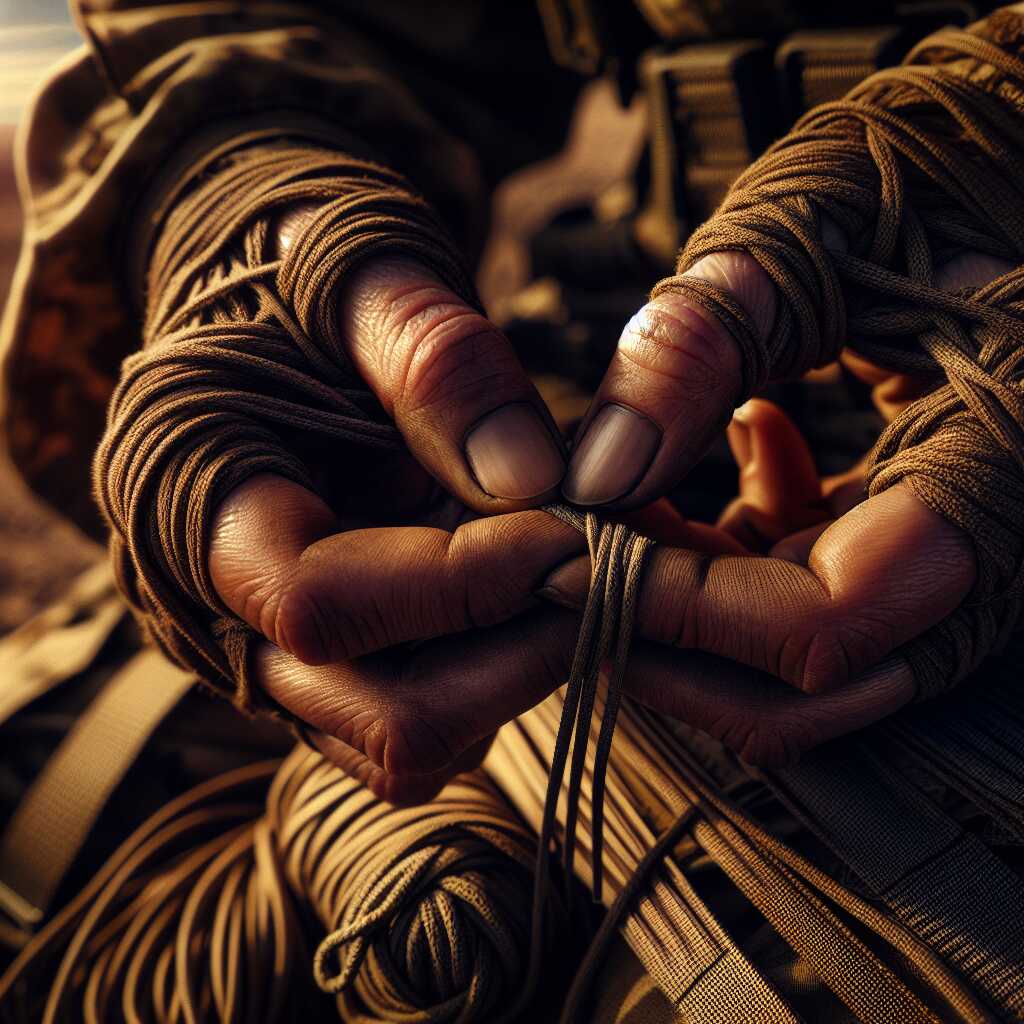
- Select the right tie (1-2 minutes): Choose a hair tie sized to the cord (small loop for thin cables, thicker/long-loop tie for 3-6 mm cord). Instruction: compare tie diameter to your coiled bundle and pick one that stretches without overstressing. Result: a tie that will hold without cutting into the cord or snapping.
- Measure and coil the cord (30-90 seconds): For hand-wound coils, form loops 10-30 cm in diameter for 1-5 m cords (smaller loops for short cords to reduce bulk). Instruction: keep coils even and avoid sharp bends that damage internal strands. Result: an evenly coiled bundle that fits into pockets or kit compartments.
- Wrap and secure (10-60 seconds): Stretch the hair tie around the coil (for very small loops, loop twice) and position it so it grips the center of the coil. Instruction: pull the tie so it compresses but does not cut into the cord; for thicker bundles use two ties spaced 5-10 cm apart. Result: a compact, tangle-free bundle ready for storage.
- Label or color-code (optional) (1-3 minutes): Use colored ties or small tags to indicate length, type, or intended use (e.g., red = 2 m, green = 5 m). Instruction: attach a small flag or write on a removable tag. Result: faster selection during an emergency or on the trail.
- Store smartly (30-120 seconds): Place bundled cord in a dry pouch, dedicated pocket, or hang on a peg inside your kit. Instruction: avoid direct sunlight and contact with oils/solvents. Result: prolonged tie life and easy access; bundles occupy less space and are ready to grab-and-go.
- Inspect and replace regularly (30 seconds every 6-12 months): Check ties for cracking, loss of elasticity, or contamination. Instruction: replace ties that feel brittle, sticky, or that no longer hold securely; keep spares in your kit (store 10-20 extra ties per kit depending on number of cords). Result: maintained reliability ties that remain elastic will keep cords organized; degraded ties will be removed before failure.
- Know the limits do not rely on ties for load or weatherproofing (10-20 seconds): Instruction: never use hair ties as shock cords, slings, or for bearing weight; they are not weatherproof clamps and will degrade with UV, heat, oils, or solvents. Result: safer use of ties for organization only; use rated hardware (carabiners, cordage, knots) for load-bearing or permanent outdoor exposure.
FAQ
what are elastic hair ties exactly and how are they used
Elastic hair ties are small reusable loops of elastic covered in fabric that secure rope, paracord, cables, and cords by wrapping and holding coils in place for storage and transport. Each tie costs about $0.05 to $0.50, provides low weight, and is easy to carry in pouches, pockets, or first aid kits for reliable cord management. Predicament Measures recommends elastic hair ties for simple kit organization because testing and user reviews in 2025 show they improve accessibility, enhance efficiency, and offer a quality, low-cost option.
how do elastic hair ties differ from rubber bands and clips
Elastic hair ties differ from rubber bands by having a fabric cover that reduces cutting into cord sheath and by stretching with less snap risk compared to bare rubber bands. Elastic hair ties differ from plastic or metal clips by being lighter, cheaper, and easier to store, while clips cost $5 to $20 for many commercial organizers and take more pouch space. Reviews and comparison testing show hair ties are useful for short-term bundle securing, not designed to handle load, and not a clamp for structural use.
how do elastic hair ties work step by step for cord organization
Elastic hair ties work by letting you coil cord, wrap the hair tie around the coil, and tuck or loop the cord end under the tie to lock the bundle. Typical operations take 10 to 60 seconds per bundle depending on cord thickness and desired tightness, and they work well for cord lengths commonly 2 to 5 meters in many kits. Experience and practical testing show this method reduces tangling for stored cords, improves grab time, and increases kit reliability for daily use and emergency access.
what are the best wrapping knot and bundling steps to follow
The best steps are to coil the cord in loose loops that match the cord stiffness, use an over-under coil for longer line control, place the hair tie around the midsection, then slide or twist the tie to hold the bundle securely. For paracord and thin cables use a single hair tie; for thicker rope use two ties spaced 5 to 10 cm apart to keep the coil compact and stable. Testing and expert reviews show a snug but not crushing wrap lets cords deploy quickly and preserves cord sheath and knot reliability.
what are the main benefits of using elastic hair ties in kits
The main benefits of elastic hair ties in kits are space savings, tangle prevention, and very low cost compared to many commercial solutions that cost $5 to $20. Hair ties deliver fast organization with 10 to 60 seconds per bundle and provide a durable, reusable option that enhances kit efficiency and improves access during drills and real incidents. User experience and reviews show hair ties are essential for everyday carry, hiking, camping, and emergency kits, while remaining easy to replace and test in regular kit maintenance.
how much space weight and convenience savings can I expect
You can expect small space and weight savings because a single hair tie typically weighs 1 to 3 grams and fits inside a coin pocket or small pouch, while a pack of 20 ties compresses into a 5 cm by 5 cm bag. Time savings come from faster bundle management at 10 to 60 seconds per cord, which improves response speed in drills and real use and enhances overall kit convenience. Cost comparison shows a single hair tie at $0.05 to $0.50 delivers good value versus bulkier organizers, and testing shows they help keep pouches neat and gear accessible.
what are the risks and limitations of using elastic hair ties outdoors
The main risks and limitations are that elastic hair ties are not load bearing, are not weatherproof long term, and will lose elasticity from UV, oils, solvents, and prolonged heat exposure over months to years. Hair ties are less effective for very long coils over about 10 meters and they cannot replace proper rope management gear for heavy loads, climbing, or rescue work. Research and field testing advise treating hair ties as a convenience item for storage and handling, not as a safety-critical component in technical rescue or load-bearing applications.
how weather wear and load affect elastic hair tie performance over time
Weather and load affect performance because UV light, saltwater spray, oils, and solvent contact cause fabric and elastic cores to degrade in time, with noticeable loss of stretch occurring over months to a few years depending on exposure. Repeated stretching and tight storage in heat will reduce elasticity and reliability, so inspect ties during kit maintenance and replace on a 6 to 18 month cycle for critical kits based on observed wear. Testing data and user reviews suggest storing ties in dry, dark pouches to extend life and improve reliability for emergency use.
who should consider using elastic hair ties in emergency kits now
Preppers, emergency kit builders, hikers, backpackers, campers, scouts, everyday commuters, travelers, outdoor instructors, and rescue personnel should consider elastic hair ties for low-cost cord control and faster deployment. Hair ties are essential for anyone who carries multiple cords such as charging cables, paracord, tent guy lines, and straps because they improve organization, reduce tangle time, and enhance kit usability. Predicament Measures lists elastic hair ties as a useful, proven item in 2025 kit checklists for affordable, easy, and reliable cord management.
what types of users and gear benefit most from hair tie organizers
Users who benefit most include day hikers, overnight backpackers, urban commuters, and instructors who pack charging cables, headlamp cords, paracord up to 2 to 5 meters, tent guy lines under 10 meters, and small medical tubing. Gear that benefits most includes paracord, USB cables, small extension cords, headlamp straps, and compact tool lanyards because hair ties stabilize coils, help rapid deployment, and improve pack organization. Reviews and comparison testing show hair ties deliver excellent value for lightweight trips and daily carry, while rescuers should use them only for non-load items and non-life-critical organization.
when is the best time to use elastic hair ties while packing a kit
Use elastic hair ties at final organization and each time you coil cordage before stowing to prevent tangles and save space, especially for cords up to about 2-5 meters in length. Wrapping and securing a short cord takes about 10 to 60 seconds per bundle in typical use, and field testing and user reviews from 2025-era prepper forums show reliable, useful results for everyday kit cordage. Elastic hair ties are not load bearing, do not replace hardware, and can degrade from UV, oils, and solvents over months to years so packs should include spares and inspection routines.
how often should I check replace or retension hair ties in storage
Check and retension elastic hair ties every 3 to 12 months depending on environment and use to maintain reliability and prevent slack or failure. Replace hair ties if you see fraying, sticky residue, loss of elasticity, or hardening, with typical replacement intervals between 6 and 24 months in outdoor or high-UV storage.
how much do elastic hair ties cost compared to cord organizers and paracord
Elastic hair ties cost about $0.05 to $0.50 per unit and provide a very low-cost option compared to commercial cord organizers that range from $5 to $20 per item, and typical 550 paracord that costs roughly $0.20 to $1.00 per meter depending on quality. Cost comparison and review data suggest hair ties deliver strong value for short cord management and space savings in emergency kits while offering fast, easy performance during packing. Hair ties do not replace paracord for load tasks or multi-use cordage needs and lack weatherproof sealing that some specialized organizers provide.
what price per unit and pack sizes give the best value for money
Bulk packs of 50 to 200 elastic hair ties typically yield the best price per unit, often below $0.10 each, which improves cost efficiency for kit builders and group gear. Choose fabric-covered or silicone-coated packs if you need more durable, quality-feeling ties that perform better in wet or abrasive use while staying within a low-cost budget.
what materials and tools are needed to use elastic hair ties effectively outdoors
Elastic hair ties need no special tools and work with simple materials like fabric-covered elastic, silicone-coated bands, a small zip pouch, and a labeled divider to keep bundles organized and accessible. Optional tools include a small pair of scissors for trimming damaged ties and a test checklist to evaluate elasticity and durability during routine inspection cycles. Predicament Measures testing notes that keeping ties dry and stored inside a zip pouch improves longevity and ensures reliable performance in field use.
what sizes strengths and material types should I choose for different cords
Choose small elastic loops of 2-4 cm unstretched diameter for cords under 4 mm, medium 4-6 cm for cords up to 6 mm, and large 6-8 cm for thicker ropes or multiple cables; select fabric-covered ties for abrasion resistance and silicone-coated ties for wet conditions. Do not use hair ties as load-bearing connectors, and pick thicker, wider ties for tougher cordage to enhance durability and reduce overstretching risk.
what are the best alternatives to elastic hair ties for cord management in kits
Good alternatives include reusable Velcro straps, twist ties, paracord wraps, small plastic cable organizers, and light-duty zip ties, each offering different trade-offs in cost, durability, and reusability. Velcro straps provide adjustable hold and moderate durability, twist ties give the lowest cost and lightest weight, and paracord wraps offer a durable, multi-use option when you need cord that can also serve other tasks. Alternatives like single-use zip ties provide strong short-term hold but fail in reusability and repairable performance.
how do velcro straps twist ties and paracord wraps compare in pros and cons
Velcro straps cost about $0.50 to $3 each, are reusable, provide sturdy hold for cords up to several meters, and perform well in many reviews for durability and easy use. Twist ties cost $0.01 to $0.10 each, offer very low price and light weight, and do not last as long as Velcro or paracord; paracord wraps require extra time to tie but provide durable, multiuse cordage that can handle load tasks and serve as an emergency resource.
what common mistakes should be avoided when using elastic hair ties in a kit
Avoid overstretching hair ties, using them as load-bearing connectors, and storing them exposed to sunlight or solvents because those practices reduce reliability and lifespan. Packing wet or oily cordage with elastic ties can trap moisture and speed material breakdown, and mixing hair ties with sharp-edged hardware will cause cuts, snags, and reduced performance. Keep spare ties and include inspection steps in your kit checklist to maintain proven performance and good results.
how can I prevent damage overstretching and poor packing habit mistakes
Prevent damage by storing hair ties in a dry pouch, rotating sets every 6 to 12 months, and keeping them away from UV and chemical exposure; this routine improves life and ensures reliable performance. Train kit users on proper coiling methods, use the right tie size for the cord, and include extra ties in your kit so your testing, experience, and reviews show consistent efficiency under field conditions.
Related posts:
 Unwaxed Dental Floss: High-Strength Fishing Line Alternative for Wilderness Food Procurement
 Petroleum Jelly Cotton Balls: Five-Minute Burn Time Fire Starters for Damp Conditions
 550 Paracord Shoelaces: Hidden Survival Rope for Emergency Rappelling Situations
 White Cotton T-Shirts: Char Cloth Creation for Flint and Steel Fire Starting
 Used Coffee Grounds: Human Scent Masking for Wildlife Avoidance in Bear Country
 Maxi Pads: Large Absorbent Bandages for Major Trauma Wound Coverage
 Rubber Erasers: Emergency Ear Protection Against Dangerous Noise Levels
 Acrylic Yarn: Emergency Wound Sutures for Gaping Lacerations