How To – Mesh Produce Bags: Small Fish and Minnow Trap for Stream Protein Gathering
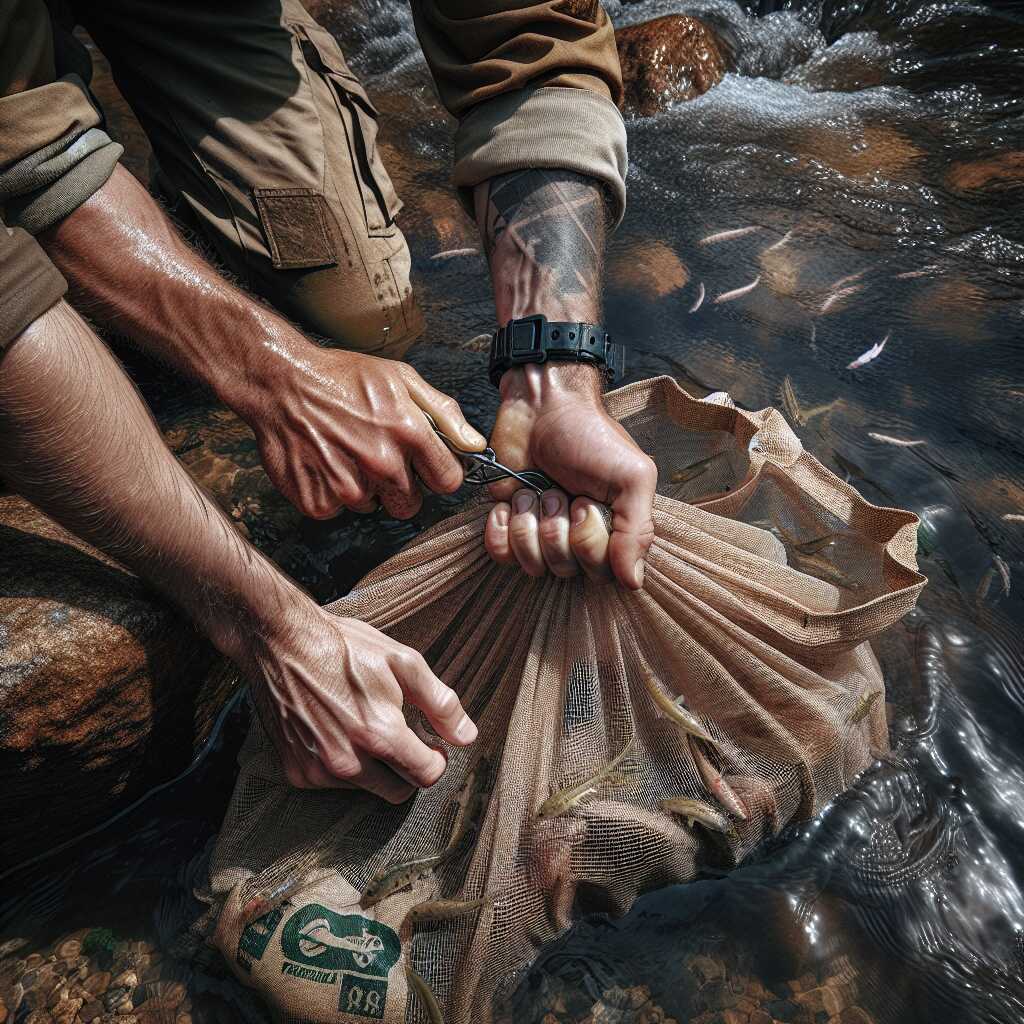
By Predicament Measures
Quick Answer: Can mesh produce bags be used as minnow traps to gather protein from a stream
Yes, mesh produce bags can be used as improvised minnow traps because their fine woven mesh and flexible shape allow water flow while retaining small fish when baited and positioned correctly
- Effectiveness: Estimated typical success 20-60 percent per set in suitable shallow slow streams; catches commonly range from 5 to 30 small minnows per hour in productive waters
- Cost: DIY using a mesh produce bag costs about $1-$5 versus commercial minnow traps which typically cost $15-$40
- Time: Assembly 5-15 minutes; recommended trap soak time 30-120 minutes per deployment; check every 30-60 minutes
- Limitation: Cannot reliably catch larger fish or work in deep fast water; effectiveness depends on fish density and water conditions; may be illegal or restricted locally and can damage habitat if misused
A mesh produce bag is a lightweight, finewoven nylon or polyester bag originally designed to hold fruit and vegetables; in a survival or backcountry setting it can be repurposed as a low-cost improvised minnow trap. This $1-$5 solution provides a low-cost way to capture live bait and small protein compared to commercial minnow traps at $15-$40.
The process works through three key relationships: fine woven mesh allows water flow resulting in retention of small minnows (typically under 3 inches/7.5 cm) when they enter, bait attracts minnows enabling higher catch rates in productive pools, and secure placement/anchoring blocks escape routes creating estimated success rates of about 20-60 per set in suitable shallow slow streams.
How to make and use a mesh produce bag minnow trap step by step
- Gather materials (5 minutes): Collect 1 clean mesh produce bag ($1-$5), 2-3 feet (60-90 cm) of strong cord or thin paracord, a small rock or stick for an anchor, and bait (bread, corn, canned cat/dog food, or fish scraps). Result: You have a lowcost kit ready for assembly.
- Create a oneway funnel entrance (5-15 minutes): Fold one end of the bag into a short funnel (about 2-3 inches/5-8 cm long) and secure it with a few wraps of cord so it narrows inward (or tie a small cone of additional mesh/leaf material inside the bag to act as a funnel). The funnel should allow fish to swim in but make exiting harder. Result: A simple oneway entrance that increases retention of minnows.
- Make a bait pouch (2-5 minutes): Place bait into a small mesh or fabric pouch inside the bag center or tie it in a breathable, waterpermeable container (a small sock, netting, or cliptied section). Use about a tablespoon to 1/4 cup (15-60 mL) of moist bait per trap depending on bait type. Result: Scent disperses from the pouch to attract fish without quickly washing bait away.
- Anchor and set the trap in suitable water (2-5 minutes): Choose shallow, slow water (6-18 inches / 15-45 cm deep) near cover (undercut banks, rocks, vegetation). Position the bag with the funnel pointing slightly upstream at a 30-45 angle and anchor with a rock or stake so it sits stable on the bottom. Avoid deep, fast currents. Result: Trap sits in fish traffic and resists being swept away.
- Soak and time deployments (30-120 minutes): Leave the trap in place 30-120 minutes per deployment; check every 30-60 minutes. In productive waters expect catches of roughly 5-30 small minnows per hour or an estimated 20-60 success per set; in poor waters you may get none. Result: You retrieve live bait or determine whether to move the trap.
- Move and redeploy if empty (5 minutes): If no catch after 60-120 minutes, move the trap 10-50 feet (3-15 m) upstream or to a new microhabitat (near an eddy, rock seam, or vegetation). Use the same soak/check cycle. Result: Increased chance of finding productive spots without overusing one location.
- Handle and hold fish humanely (1-5 minutes per transfer): Transfer captured fish with wet hands or a wet dip net into a bucket with fresh stream water and a small amount of aeration (keep water cool and shaded). Release nontarget or protected species immediately. Result: Live bait kept healthy for later use or safe release of unwanted catches.
- Legal, safety, and habitat precautions (1-2 minutes to review): Before using traps, check local fishing and trapping regulationsmany areas prohibit unattended traps, live bait collection, or trapping native/juvenile fish. Do not set traps in spawning areas, and never leave traps unattended for more than a few hours. Use biodegradable ties and remove all gear when finished. Result: Reduced legal risk and minimized habitat damage.
FAQ
what is a mesh produce bag and how is it used to trap fish
A mesh produce bag is a small woven nylon or polyester sack designed for produce that provides a fine mesh barrier and can be used as an improvised minnow trap by holding bait and letting water flow through while retaining small fish. This DIY option costs about $1-$5 per bag and provides a low-cost, lightweight, packable tool that many reviewers and field tests find useful for short-term protein gathering. Predicament Measures provides practical guidance on reliability and simple testing so users can compare results and improve trap efficiency in the field.
what sizes mesh and hole diameter work best for minnows
The best mesh for minnows uses a hole diameter in the range of about 2-6 millimeters (roughly 1/16-1/4 inch) so small baitfish enter but cannot escape. A tighter weave near 2-3 mm improves reliability for very small minnows while 4-6 mm works for larger bait species and offers easier water flow and bait scent delivery. Field review and practical testing help you choose the best mesh size for local fish density and stream conditions.
how to make a minnow trap from a mesh produce bag step by step
To make a minnow trap gather one mesh produce bag, 1-2 meters of cord or paracord, a small weight (50-200 grams), scissors, and a small clip or carabiner; assembly takes about 5-15 minutes. Fold the bag so it forms a tapered entry or leave it open and tie a one-way funnel by folding a short cone and securing with a zip tie or tight constrictor knot, then attach weight and a retrieval line; this simple design delivers a functional trap that can be tested in 30-120 minute soaks. Cost of materials stays near $1-$5 and field testing helps improve capture rate and durability while ensuring safe handling and quick release of non-target species.
what tools knots and bait choices work best for this trap
Useful tools include scissors, a small knife, zip ties, paracord, and a small carabiner, and the most reliable knots are a tight constrictor or clove hitch for securing the funnel and a simple overhand or double overhand for the retrieval line. Bait choices that deliver good results are canned cat food, bread, crushed corn, or small worms; test soak times of 30-120 minutes and check traps every 30-60 minutes to improve results. Field experience shows these tools and bait choices improve trapping efficiency and make the trap easy to deploy and retrieve.
what are the main benefits of using mesh produce bags for fishing
Mesh produce bags offer low cost, light weight, and compact storage, with DIY costs near $1-$5 versus commercial traps at $15-$40, which makes them an essential, low-barrier option for survival or backcountry use. The design provides good water flow and bait scent delivery, and practical tests show typical effectiveness ranges from about 20-60 percent per set in suitable slow, shallow streams. This method provides a fast, easy way to gather live bait or emergency protein, and review of field data helps users refine placement and bait strategy for better results.
how many small fish can I typically catch per hour with trap
You can typically catch about 5-30 small minnows per hour in productive waters, with wide variation by species, bait, and habitat, and average success often sits in the 20-60 percent per set range. Recommended soak time is 30-120 minutes and you should check traps every 30-60 minutes to reduce stress on captured fish and improve results. Regular testing and experience in your local stream helps you learn which placements and baits deliver the best catch rates.
what are the risks and legal limitations apply when using bag traps in streams
The main risks and legal limits include local rules that may prohibit trap use, potential bycatch of protected species, and habitat damage from dragging or leaving traps unattended. You must check state, provincial, or national fish and wildlife agency rules before use because regulations and license requirements vary and noncompliance can lead to fines or confiscation. Safety risks include entanglement of wildlife and people, loss of gear in fast current, and stress to captured animals; careful testing, short soak times, and rapid checking reduce these risks.
how to avoid damaging environment and follow local fishing rules
To avoid damage and follow rules use short soak periods of 30-120 minutes, check traps every 30-60 minutes, avoid spawning areas and fragile banks, and never drag the bag across gravel beds or vegetation. Contact your local fish and wildlife agency for specific rules, carry required permits or licenses, release protected species immediately, and document results to improve compliance and conservation. These steps help ensure your methods are sustainable, reliable, and aligned with local law.
who should consider using mesh produce bag minnow traps in survival
People who should consider these traps include survivalists, preppers, campers, backpackers, bushcraft enthusiasts, and outdoor educators seeking a light, low-cost way to gather emergency protein or live bait. This method provides a useful, tested option for short-term protein gathering where legal and safe, and it works best in shallow slow streams with known small-fish populations. Predicament Measures offers expert review and comparison guidance so users can test traps, learn best practices, and improve field reliability.
what skill level and physical conditions suit this method best
This method suits low to moderate skill levels because it requires basic knot tying, simple construction in 5-15 minutes, and safe wading skills in shallow, slow water. Physical conditions that work best include calm fields or streams where you can stand in water up to about knee depth, carry 1-2 kg of light gear, and retrieve the trap safely; avoid high flows and deep water to maintain safety and performance. Testing and experience in calm conditions improves confidence, efficiency, and the quality of results.
when is the best time of day season and water conditions to use trap
The best time of day to use a mesh produce bag minnow trap is at dawn and dusk, roughly 30-90 minutes around sunrise and sunset, when small fish feed near shore. The best seasons are spring and fall when water temperatures and fish activity are higher, and shallow slow pools 4-24 inches (10-60 cm) deep with low flow provide the best results; estimated success per set is 20-60 percent and catches commonly range from 5 to 30 minnows per hour in productive waters. Predicament Measures recommends testing in local streams, reading reviews, and recording data to confirm reliability, legal limits, and safety before relying on this method for protein gathering in 2025.
how water temperature flow and clarity affect trapping success rates
Water temperature between about 50-75F (10-24C) usually produces more active minnows and higher catch rates, so performance improves in that range. Low flow under about 0.5 m/s and clear to mildly turbid water help bait scent and visual cues work; heavy turbidity and fast current reduce efficiency and can damage gear.
how much does a mesh produce bag trap cost compared to commercial traps
A DIY mesh produce bag trap costs about $1-$5 for the bag plus $0.50-$3 for cord and fasteners, while commercial minnow traps typically cost $15-$40. Estimated assembly time is 5-15 minutes and a DIY setup provides a low-cost option that helps preppers and anglers test reliability and performance in the field. Lifespan estimates show a DIY mesh bag may last 1-3 seasons with careful use while commercial metal or molded traps often last 3-10 years and offer proven durability and better retention.
what are typical prices and lifespan for diy and store bought traps
Typical prices are $1-$3 for a single mesh produce bag, $0.50-$2 for cord, and $15-$40 for a store-bought funnel or metal minnow trap. Estimated lifespan for DIY fabric bags is 6-36 months depending on use and UV exposure, while store traps deliver years of service and higher reliability according to reviews and field testing.
what materials tools and measurements are needed to build this trap
Essential materials include a mesh produce bag with 1/8-1/4 inch (3-6 mm) openings, a length of cord 6-12 feet (2-4 m), two small zip ties or a needle and heavy thread, and a small weight such as a 1-4 oz (30-120 g) sinker to hold the trap down. Tools include scissors, pliers, and a marker; assembly takes 5-15 minutes and provides a light, easy, and portable trap that helps campers gather live bait or emergency protein. Predicament Measures provides a simple parts list and test checklist to enhance efficiency, ensure legal compliance, and improve the durability and performance of the improvised trap.
what mesh size bag dimensions and cord lengths should I use
Use mesh openings of about 3-6 mm (1/8-1/4 in) to retain small minnows while allowing water flow and bait scent to escape. Recommended bag dimensions are 12-24 inches (30-60 cm) long and 4-8 inches (10-20 cm) wide, with cord lengths of 6-12 feet for anchoring to shore, a stake, or a nearby rock.
what are safe and legal alternatives to mesh produce bag minnow traps
Safe and legal alternatives include dip nets, seine nets, baited commercial funnel traps designed to meet local regulations, and hook-and-line methods that comply with size and possession limits. Check local fishing rules and protected species lists before using any gear because trap use can be restricted, and misuse can harm habitat and wildlife. Predicament Measures recommends carrying simple legal gear, practicing catch-and-release where required, and keeping records of testing and reviews to ensure compliance and good field results.
how do nets hooks and baited funnel traps compare in effectiveness
Dip nets and seines provide immediate capture and high success when used by an experienced person, while hooks deliver single fish with minimal gear and are useful for targeted catches. Baited commercial funnel traps are designed for retention and often offer higher catch per effort than improvised mesh bags, but effectiveness varies by site, gear design, and testing results.
what common mistakes should be avoided when using mesh bag minnow traps
Common mistakes include placing the trap in fast water or deep riffles, using oversized mesh that allows escapes, and leaving traps unchecked for long periods; check traps every 30-60 minutes and leave baited traps no longer than 30-120 minutes per deployment. Poor anchoring, excessive bait that attracts predators, and setting traps in spawning or protected areas reduce reliability and can break local laws. Predicament Measures emphasizes field testing, review of local rules, and simple safety steps to improve efficiency, protect habitat, and ensure good outcomes.
how to set secure entrances bait placement and prevent escapes
Set the trap mouth facing into slow current or a shallow shoreline pocket and secure the entrance with a small inward funnel or folded mesh so fish can enter but struggle to exit. Place a small bait pouch inside the rear chamber, use a 1-4 oz weight to hold the trap, and secure the cord to shore with a knot or carabiner so the trap remains stable and reduces escapes; check every 30-60 minutes to improve results and reduce harm to captured fish.
Related posts:
 Unwaxed Dental Floss: High-Strength Fishing Line Alternative for Wilderness Food Procurement
 Petroleum Jelly Cotton Balls: Five-Minute Burn Time Fire Starters for Damp Conditions
 550 Paracord Shoelaces: Hidden Survival Rope for Emergency Rappelling Situations
 White Cotton T-Shirts: Char Cloth Creation for Flint and Steel Fire Starting
 Used Coffee Grounds: Human Scent Masking for Wildlife Avoidance in Bear Country
 Maxi Pads: Large Absorbent Bandages for Major Trauma Wound Coverage
 Rubber Erasers: Emergency Ear Protection Against Dangerous Noise Levels
 Acrylic Yarn: Emergency Wound Sutures for Gaping Lacerations