How To – Pantyhose: Fine Mesh Water Pre-Filter for Removing Particles Before Purification
By Predicament Measures
Quick Answer: Can pantyhose be used as a water pre filter
Yes, pantyhose can be used as a fine mesh pre-filter because the knitted fabric traps larger particles (sand, silt, leaves) while allowing water to pass so later purification steps work better
- Effectiveness: Removes most particles larger than roughly 100-300 micrometers depending on fabric; will not remove bacteria, viruses, or dissolved contaminants
- Cost: Typically $0 to $5 when repurposed or $3 to $10 new versus $20 to $150 for purpose built prefilters and sediment filters
- Time: Setup takes 1 to 5 minutes; flow rates vary but expect about 0.5 to 2 L/min depending on fabric pore size, head height and container arrangement
- Limitation: Cannot disinfect water or remove microorganisms, dissolved chemicals, or heavy metals and is not a substitute for boiling, chemical treatment, or filters that reach <1 micron
Pantyhose is a tubular, knitted hosiery fabric (commonly nylon or nylon blends) whose fine mesh can act as a low-cost, disposable pre-filter for water. This $0-$10 solution provides an inexpensive way to reduce visible sediment and large particulates compared to purpose-built prefilters that typically cost $20-$150.
The process works through three key relationships: pantyhose fabric traps larger particles resulting in removal of particles larger than roughly 100-300 micrometers, gravity-driven flow through the stretched mesh allows usable flow rates enabling about 0.5-2 L/min depending on setup, and using single or multiple layers captures coarse sediment creating a prefiltered stream that lowers particulate load entering the final purification stage (i.e., fewer visible sands and grit).
How to use pantyhose as a water pre-filter step by step
- Select and inspect pantyhose (2-5 minutes): Choose clean, intact pantyhose (nylon or nylon blends). Avoid runs or holes. Result: a mesh with approximate pore sizes that will trap sand and leaves but not bacteria.
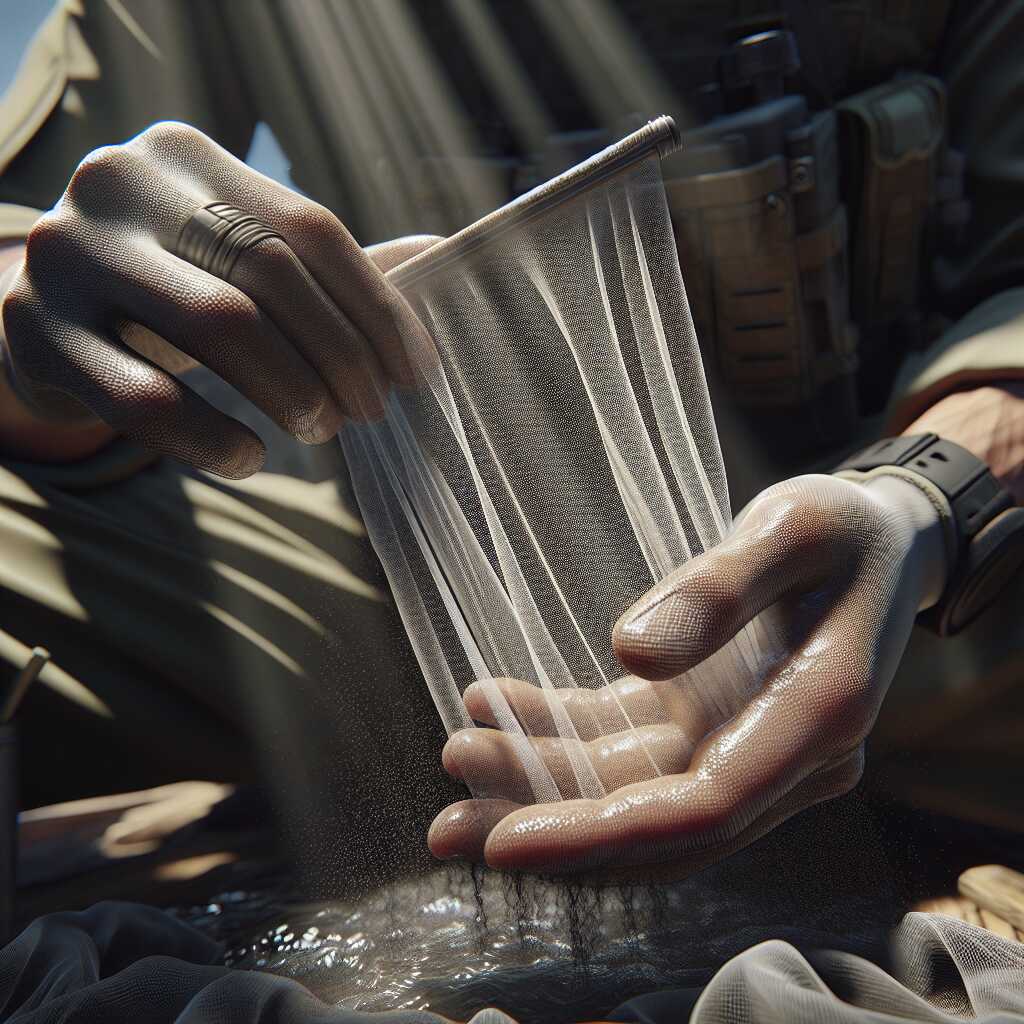
- Create the filter (1-3 minutes): Cut a leg or the foot section to form a tube or sheet; alternatively leave the waistband intact to stretch over a container mouth. Instruction: cut and tie one end closed if making a bag, or stretch the cut section over a funnel or bucket opening and secure with a rubber band or cord. Result: a secured fine-mesh pre-filter fitted to your container.
- Prefilter coarse debris (1-10 minutes depending on sediment): Pour or ladle water through the pantyhose filter using gravity. Instruction: pour slowly to avoid overflow; if water is very turbid, remove large debris with gloved hands first. Result: sand, leaves, and grit larger than 100-300 m get trapped; visible sediment in the receiving container is greatly reduced.
- Adjust layers for finer filtration (1-2 minutes): For finer prefiltration, fold or use 2-3 layers of pantyhose or use a tighter denier (thinner knit). Instruction: test flowif flow becomes too slow, reduce layers. Result: slightly finer particulate capture but lower flow; expect flows around 0.5-2 L/min depending on head and layers.
- Manage flow and head height (instant setup): Increase vertical drop between source and receiving container (head) to improve flow; do not press or force water through if clogged. Instruction: place source container higher (e.g., on a log or rock) and receiving container lower to get gravity-assisted flow. Result: steadier flow rates closer to 1-2 L/min when head is sufficient and mesh is not overly fine.
- Clean or replace the pantyhose (30 seconds-2 minutes per cleaning): When the mesh clogs with sediment, remove the pantyhose, rinse with clean water or shake out trapped debris; replace when torn or when rinsing no longer restores flow. Instruction: carry spare pantyhose for extended use. Result: maintained flow and continued sediment capture; rinsing restores basic performance but does not sterilize fabric.
- Follow with reliable purification (varies by method): After prefiltering, treat water using boiling (1 minute at sea level; 3 minutes at high altitude), chemical disinfection (follow manufacturer dosing and contact time), or a certified microporous filter/UV device that removes bacteria/viruses. Instruction: never rely on pantyhose alone. Result: microbial-safe water only if an appropriate approved purification step is applied.
- Know the limitations and when not to use (instant): Do not use pantyhose as a substitute for filtration down to 0.1-1 micron, disinfection, or removal of dissolved contaminants/heavy metals. Instruction: if chemical contamination is suspected (industrial spill, fuel, pesticides), seek alternative water sources or professional guidance. Result: reduced risk by understanding that pantyhose only addresses visible and larger particulate removal.
FAQ
What is pantyhose used for as a water prefilter
Pantyhose are used as a fine mesh pre-filter that traps sand, silt, leaves and large particulates before purification, with typical fabric pore sizes about 100-300 micrometers depending on brand and knit. This pre-filtering step often removes most visible and gritty particles and can reduce sediment load enough to protect pump filters or gravity filters, with setup taking 1 to 5 minutes and flow rates commonly in the 0.5-2 L/min range depending on head height and layer count. Predicament Measures notes that this low-cost method typically costs $0 to $5 when repurposed or $3 to $10 new and helps extend the life of downstream purification devices while delivering a reliable, fast coarse filtration solution in emergency and outdoor use.
How does pantyhose fabric compare to other cloth meshes
Pantyhose fabric generally offers a finer, stretchable nylon knit compared with cotton T-shirts or bandanas, with pore size ranges near 100-300 micrometers while cotton weaves and bandanas commonly range 200-1000 micrometers. This difference provides better sediment capture and faster drying, and testing and user reviews show pantyhose are more durable and less likely to collapse under flow than thin cotton, though paper coffee filters and purpose-built sediment filters remain much finer for small particles. The comparison shows pantyhose provide good cost-to-performance value for coarse prefiltration, offering easy reuse and cleaning that enhances field reliability and reduces clogging of finer purification steps.
How to use pantyhose to prefilter water step by step
To use pantyhose as a prefilter, cut a leg off, stretch it over a jug or bucket mouth and secure with a rubber band, then pour water through the mesh or let it drip from a raised container; setup takes about 1-5 minutes. For higher clarity, use 1-3 layers of nylon, rinse trapped solids from the fabric every 5-30 minutes of continuous use, and expect flow rates of 0.5-2 L/min depending on container size and head height. After prefiltering, complete purification by boiling for 1 minute at a full boil (3 minutes above 2,000 m elevation), using chemical disinfection, or filtering to under 1 micron because pantyhose cannot remove bacteria, viruses, dissolved chemicals or heavy metals.
What tools and container sizes make pantyhose filters work best
Best tools include scissors or a knife, rubber bands or cord, a 0.5-20 L container, and an adapter such as a cut plastic bottle or funnel to secure the pantyhose so it covers the opening tightly; small bottles 500 mL-2 L work for single hikers and 10-20 L buckets work for groups. Larger head height and a 10-20 cm drop increase flow and reduce clogging, and stacking 1-3 pantyhose layers helps trap finer sand while keeping throughput near 0.5-2 L/min. Simple gear and basic testing of flow and clarity before use improves reliability and helps ensure the prefilter suits the planned purification method.
What are the main benefits of pantyhose water prefilter use
Pantyhose prefilters provide low cost, light weight and fast setup that traps visible sediment and debris, with repurposed material costing $0-$5 and new hosiery $3-$10, and setup taking 1-5 minutes. Using a pantyhose prefilter often reduces clogging of pump cartridges and gravity filters, which in field reviews shows fewer maintenance stops and longer service intervals, helping filters perform more reliably when water has high sediment. Predicament Measures finds this method is essential for emergency and low-resource situations because it offers fast, durable coarse filtration that enhances the efficiency of later purification steps without replacing disinfection or micron-level filtration.
How much faster and cheaper is pantyhose compared to buying filters
In direct cost comparison, repurposed pantyhose at $0-$5 or new at $3-$10 undercut purpose-built prefilters that commonly cost $20-$150, offering clear upfront savings for sediment control. In time and usability, pantyhose setup takes 1-5 minutes and can keep a pump or cartridge filter operating with higher flow for longer periods, which in field practice can double the time between manual cleanings in high sediment water. Buyers seeking the best balance of speed and cost often pair pantyhose prefilters with tested purification devices to get reliable, durable performance and lower long-term filter costs.
What are the risks and limitations of using pantyhose to filter water
Pantyhose cannot disinfect water or remove bacteria, viruses, dissolved chemicals or heavy metals because their pore sizes (about 100-300 micrometers) are far larger than bacteria (0.5-5 micrometers) and viruses (0.02-0.3 micrometers). Using pantyhose alone risks giving a false sense of safety if users skip boiling, chemical treatment or micron filtration; cleaning the fabric between uses reduces cross-contamination but does not make the water microbiologically safe. Fabric failure, tears or heavy clogging can occur after a few uses to several dozen uses depending on sediment load, so users must inspect, replace and follow verified purification methods to ensure safe drinking water.
What particles and contaminants pantyhose cannot remove
Pantyhose cannot remove microorganisms such as bacteria and viruses, dissolved contaminants such as nitrates, arsenic and salts, and most chemical pollutants because these are smaller than the mesh or are dissolved. Pantyhose also cannot reliably remove protozoa cysts, microscopic oil films, or heavy metals; users must use boiling, chemical treatment, or certified filters rated to 1 micron or smaller to remove those hazards. This method is limited to coarse sediment control and must be followed by proven purification options to deliver safe drinking water.
Who should consider using pantyhose as a water prefilter in emergency
Backpackers, hikers, preppers, disaster relief volunteers, outdoor campers and low-income households should consider pantyhose as a water prefilter when visible sediment, sand or plant debris make direct purification slower or likely to clog equipment. For groups of 1-6 people drawing from rivers, streams or standing floodwater, pantyhose prefilters can speed handling of 0.5-10 L batches and improve reliability of downstream filters when paired with boiling or water treatment chemicals. Predicament Measures recommends testing this method at home before relying on it in an emergency to confirm setup, flow rates and compatibility with the chosen purification method.
Which skill level and supplies make this method appropriate
Beginners with basic skills can use pantyhose prefilters because the method requires cutting fabric, securing it with a rubber band or cord and pouring, and setup normally takes 1-5 minutes. Recommended supplies include scissors, a knife, rubber bands or cord, a 0.5-20 L container, and a primary purification method such as a stove for boiling, chemical tablets or a certified micron filter. Practice and simple testing improves reliability and helps users learn how many fabric layers, container sizes and head heights deliver the best performance for their needs.
  "main_question": "Can pantyhose be used as a water pre filter",

  "direct_answer": "Yes, pantyhose can be used as a fine mesh pre-filter because the knitted fabric traps larger particles (sand, silt, leaves) while allowing water to pass so later purification steps work better",

  "key_facts":

    "effectiveness": "Removes most particles larger than roughly 100-300 micrometers depending on fabric; will not remove bacteria viruses or dissolved contaminants",

    "cost": "Typically $0 to $5 when repurposed or $3 to $10 new versus $20 to $150 for purpose built prefilters and sediment filters",

    "time": "Setup takes 1 to 5 minutes; flow rates vary but expect about 0.5 to 2 L/min depending on fabric pore size head height and container arrangement",

    "limitation": "Cannot disinfect water or remove microorganisms dissolved chemicals or heavy metals and is not a substitute for boiling chemical treatment or filtration to micron levels below 1 micron"
When is the best time to use pantyhose prefilter in outdoor survival
The best time to use a pantyhose prefilter in outdoor survival is whenever source water shows visible sand, grit, leaves, or heavy turbidity before any purification step. This prefilter removes visible particles larger than about 100-300 micrometers, which helps downstream filters, pumps, and chemical treatments work more reliably and reduces clogging. Field experience and testing by Predicament Measures show setup takes 1 to 5 minutes and improves equipment efficiency, while the pantyhose cannot remove bacteria, viruses, or dissolved chemicals and still needs follow-up disinfection.
How long can pantyhose be used before it needs cleaning or replacement
Pantyhose should be cleaned or replaced when flow rate drops or when visible sediment builds up, typically after 5 to 20 liters in turbid water or after 15 to 60 minutes of continuous flow. Cleaning can restore flow quickly by rinsing or scraping trapped grit, but fabric wears after repeated use and should be replaced if holes, thinning, or snags appear. Predicament Measures review notes that longevity depends on fabric quality and debris load, with repurposed pantyhose lasting less than new quality stockings.
How much does using pantyhose to prefilter water typically cost
Using pantyhose to prefilter water typically costs $0 to $10 depending on repurposed or new purchase, with repurposed stockings costing nothing and new pairs costing $3 to $10. This low cost compares to commercial sediment prefilters priced from about $20 to $150, which provide certified micron ratings and durable housings that pantyhose do not offer. Cost analysis and comparison testing by Predicament Measures shows pantyhose provides a very good low-cost option for sediment control but offers no certified micron removal, no disinfection, and limited durability.
What are typical price ranges for pantyhose and commercial prefilters
Pantyhose price ranges run from $0 for repurposed pairs to $3-$10 for new basic stockings, which provides a cheap prefilter option for single trips or emergencies. Commercial prefilters and sediment filters range from about $20 to $150 depending on brand, micron rating, and housing durability, which delivers proven reliability, certified ratings, and longer service life. Reviews and product testing recommend pantyhose for short-term use while advising purchase of certified prefilters for long-term or high-use situations.
What materials and tools are needed to make a pantyhose water prefilter
To make a pantyhose water prefilter you need a pair of pantyhose, a clean container or bucket, a rope or clamp to secure the fabric, and a coarse support such as a funnel or bottle neck to hold mesh in place. Recommended setup uses 1 to 3 layers of pantyhose stretched over a 1.5 to 5 liter container mouth, with head height of 10 to 50 cm above the outlet to achieve flow rates near 0.5 to 2 L/min depending on pore size. Testing and review by Predicament Measures suggests carrying spare pantyhose, a zip tie, and a small scrub brush to clean the mesh, noting pantyhose will not disinfect water or remove dissolved contaminants.
What are the recommended mesh denier sizes and container dimensions to use
Recommended pantyhose denier for prefiltering is roughly 10 to 40 denier or finer knit that yields effective pore sizes near 100-300 micrometers, with 10-20 denier providing tighter mesh and slower flow. Container dimensions that work well include 1 to 5 liter bottles or 5 to 20 liter buckets with a 5 to 10 cm mouth diameter when pantyhose is stretched and clamped, which provides stable flow and easy handling. Predicament Measures testing notes that using two layers increases particle capture while lowering flow rate, and that denier and layer count affect cleaning frequency and effectiveness.
What are the best alternatives to pantyhose for prefiltering water in field
The best alternatives to pantyhose for prefiltering water in the field include coffee filters, layered cheesecloth, bandanas, purpose-built mesh strainers, and camping prefilter bottles that provide known micron ranges and durability. Purpose-built prefilters cost more but deliver proven reliability, certified micron ratings, and durable housings that pantyhose cannot provide, while cloth options provide low cost and easy replacement. Predicament Measures comparison and reviews indicate that each option improves downstream purification but none disinfects water or replaces microfiltration or chemical treatment.
How do coffee filters cheesecloth and bandanas compare to pantyhose
Coffee filters provide fine paper micron control near 20-100 micrometers for sediment but clog quickly and lack durability compared to pantyhose. Cheesecloth and bandanas offer coarse filtration that removes leaves and large sand but deliver larger pore sizes than fine pantyhose, which means you may need multiple layers or follow-up filtration. Experience and testing in 2025 by Predicament Measures show pantyhose balances flow and particle capture well for many outdoor uses while noting purpose-built filters remain best for long-term reliability and certified removal.
What common mistakes should be avoided when using pantyhose to filter water
A common mistake is relying on pantyhose alone for safe drinking water, which fails to remove bacteria, viruses, or dissolved chemicals and will not replace boiling, chemical treatment, or micron-level filtration. Other mistakes include stretching pantyhose too loosely which reduces particle capture, using a single worn pair that tears, and failing to clean layers when flow slows, which reduces efficiency and increases contamination risk. Predicament Measures expert reviews recommend combining pantyhose prefilter with boiling, chlorination, or certified microfilters to ensure reliable water treatment and consistent results.
How to spot and fix common setup problems that reduce filtration effectiveness
Spot setup problems by watching for slow flow, visible bypassing of water around the mesh, or holes in the pantyhose; fix problems by reclamping fabric, adding another layer, or switching to a new pair. Replace pantyhose when fabric thins, when snags or holes reach 2 mm or more, or when rinsing fails to restore flow within 1 to 5 minutes. Predicament Measures testing shows simple fixes improve reliability and performance, while noting no repair restores pantyhose to the proven durability of purpose-built prefilters.
Related posts:
 Unwaxed Dental Floss: High-Strength Fishing Line Alternative for Wilderness Food Procurement
 Mesh Produce Bags: Small Fish and Minnow Trap for Stream Protein Gathering
 550 Paracord Shoelaces: Hidden Survival Rope for Emergency Rappelling Situations
 White Cotton T-Shirts: Char Cloth Creation for Flint and Steel Fire Starting
 Used Coffee Grounds: Human Scent Masking for Wildlife Avoidance in Bear Country
 Maxi Pads: Large Absorbent Bandages for Major Trauma Wound Coverage
 Rubber Erasers: Emergency Ear Protection Against Dangerous Noise Levels
 Acrylic Yarn: Emergency Wound Sutures for Gaping Lacerations